

Your Ultimate Guide to Fermented Protein Powder
Last Updated: 11/8/2026
Written By: Sanskriti Pandey (Senior Marketing Analyst)
Reviewed By: Sam Salia (Founder and Pharmacist)

A scoop of protein powder can be a convenient addition to breakfast or an afternoon snack. But when the label says fermented protein powder, it’s natural to wonder what fermentation adds to the picture. Where does the protein come from? What does instantized mean? And how much protein does a scoop actually provide?
This guide takes a closer look at yeast protein, a protein source produced through fermentation. Summit Nutritions is a premium fermented protein powder brand based in NJ. We’ll explore what recent research says, how to read the ingredient amounts, and a few simple ways to work a powder into foods you already enjoy.
What is fermented protein powder?
Fermented protein powder is a broad description for a powdered protein ingredient made with the help of microbes. Two common approaches are fermenting an existing food protein and growing microbes whose cells supply the protein. The ingredient name helps identify which approach a product uses. Research describes both fermentation during plant protein processing and yeast biomass as a protein source (Kaleda et al., 2025) (Martin & Chan, 2024).
For yeast protein, the protein comes from the yeast cells. Yeast grows by using nutrients in its growing medium. After growth, manufacturers collect and process the cells to obtain the desired food ingredient. Yeast belongs to the fungi group (Timira et al., 2024).
When you read a label, it helps to separate three questions. Where does the protein come from? How was the ingredient processed? How much protein does a serving provide? The words yeast, fermented, and instantized each describe a different part of that story.
Three approaches you may come across
Fermenting a food protein
An existing protein ingredient can undergo fermentation during processing. For example, a 2025 study used lactic acid bacteria while isolating pea protein. The starting protein came from peas, and the fermentation step changed some of the ingredient’s sensory and mixing properties (Kaleda et al., 2025).
Growing yeast as a protein source
Biomass means the collected cell material. With yeast protein, the yeast cells supply the protein. Further processing can separate their components to obtain a protein ingredient with a particular composition (Timira et al., 2024).
Producing a specific protein through precision fermentation
Precision fermentation uses engineered microbes to produce selected ingredients. The desired protein can then be recovered and purified. The identity of that recovered protein depends on what the microbes were designed to produce. This describes a separate production approach that has to be established from the ingredient supplier’s information (Hilgendorf et al., 2024).
These descriptions help you understand the wider category. For the product example later in this guide, the named protein ingredient is instantized yeast protein.
How yeast protein can become a powder
The general route involves growing the yeast, collecting it, and processing the material into the desired ingredient. The steps below illustrate possible stages. The supplier’s manufacturing information determines the exact process for an individual ingredient.
· Grow the yeast. A production culture receives nutrients under controlled conditions. Yeast biomass production commonly supplies oxygen to support growth (Martin & Chan, 2024).
· Recover and process the cell material. Depending on the ingredient, processing can include opening cells, separating components, and recovering a fraction with more protein (Timira et al., 2024).
· Concentrate and dry the ingredient. Published methods for preparing yeast protein include separation and drying steps. The combination used affects the resulting ingredient (Timira et al., 2024).
· Prepare it for mixing. Powder treatments can be used to change how readily an ingredient takes up liquid and disperses. Instantization relates to this part of preparation (Ren et al., 2024).
· Make the finished formula. The protein ingredient is measured into a blend with any other ingredients specified for that product.
Why oxygen can be part of fermentation
Industrial fermentation broadly includes microbial cultivation. Yeast biomass production commonly uses oxygen and aerobic respiration to support efficient growth. The 2024 yeast biomass review explains this approach (Martin & Chan, 2024).
For a shopper, the practical question remains the identity and composition of the finished ingredient. The broad manufacturing term alone gives limited detail about the powder in your container.
Does fermented mean probiotic?
The presence of live microbes depends on the final product and its processing. Fermented foods may contain live cultures, or processing may inactivate those cultures. A probiotic description additionally depends on evidence of a health benefit from the live microbes at an appropriate amount (Caffrey et al., 2025).
If your goal is to add protein to a snack, start with the protein source and grams per serving. If you are specifically looking for a probiotic, check the manufacturer’s information about the organisms, their amounts, and the evidence supporting their use.

What recent research found
Protein quality depends on the ingredient
A 2024 review in the Journal of Agricultural and Food Chemistry discusses yeast protein composition, extraction, and processing. The authors describe yeast proteins as having a “complete range of amino acids” (Zhao et al., 2024, Abstract, para. 1). Amino acids are the building blocks that make up proteins.
For an individual powder, the amino acid profile and digestibility data help explain its protein quality. The review provides background on yeast proteins as a group. A finished product’s composition still depends on the specific ingredient and formula (Zhao et al., 2024).
How to read an amino acid statement
An amino acid profile reports which amino acids are present and their amounts. Evaluating a particular ingredient also involves its digestibility. The composition discussed in a review can guide the questions you ask about a powder, while the supplier’s data establish the properties of that ingredient (Zhao et al., 2024).
For example, start a product comparison with the grams of protein per serving. If amino acid composition is a deciding factor for you, look for a profile for the specific protein ingredient. A manufacturer may be able to share its specification or testing summary.
Yeast can supply protein
A 2024 review in Sustainable Food Technology describes yeast cells as a “source of nutritional protein” (Martin & Chan, 2024, Abstract, para. 1). The review concerns biomass production. Check a finished powder’s label for the protein supplied per serving.
A study showing why the process matters
In Food Chemistry, researchers compared two fermented pea protein isolates with a conventionally prepared control. The authors reported that “undesirable flavors were reduced, and bitterness decreased threefold” (Kaleda et al., 2025, Abstract, para. 1). Solubility decreased, and laboratory digestibility showed minimal changes. This illustrates why fermentation outcomes must be tied to the material and process tested.
What these papers can tell you
A review paper brings together research on a topic. It can explain why scientists are interested in yeast protein, how ingredients are produced, and which questions still need study. When you read a reference, notice whether it discusses ingredient production, laboratory measurements, or people consuming a finished food.
That difference helps you interpret the result. A study measuring how a powder mixes in water answers a question about preparation. A study measuring protein composition answers a question about what is in the ingredient. A study of people would need to measure the particular outcome being discussed.
· Check the material studied. The exact ingredient and processing method matter.
· Check what was measured. Mixing, composition, digestibility, and consumer experience are different subjects.
· Check the amount and setting. A result is easier to interpret when those details are clear.
What instantized yeast protein means
Instantized describes processing intended to improve how a powder takes up liquid and disperses. It relates to preparing the drink in a glass or shaker (Ren et al., 2024).
A 2024 review in Food & Function examines instant powder foods broadly. It discusses powder treatments and how formulation affects reconstitution, the process of mixing powder back into liquid. This research explains general mixing principles (Ren et al., 2024).
What happens when powder meets liquid
Mixing involves overlapping stages. Liquid wets the particles, the powder disperses, and soluble components dissolve. Other components can remain suspended and contribute texture. The result depends on the whole formula (Ren et al., 2024).
This is why it helps to judge a powder in the way you plan to use it. Mixing a serving into water gives you one result. Blending the same serving into a thick smoothie gives you another. The ingredients you add and the mixing method are part of the finished texture.
Why mixing and protein content are separate details
Instantization describes a preparation feature. Protein concentration, amino acid composition, and digestibility need their own supporting information. For a purchase decision, check how the label recommends mixing the powder and how much protein that serving supplies.
A simple mixing example
Imagine adding powder to a glass of water. Some powder can float on top, some can form small clumps, and some can disperse through the liquid. Adding liquid first, then powder, gives you a practical starting point. Follow the product’s directions for the amount of liquid and whether to stir, shake, or blend.
If you notice small dry pockets, try adding the powder gradually while stirring. With a shaker, follow its instructions and make sure the lid is secure before shaking. With a blender, start with the liquid so you can check the texture before adding thicker ingredients.
For your first serving, use the label’s suggested preparation. Once you know how that tastes and mixes, you can decide whether you prefer a little more liquid or a different food pairing.
How to read the label
· Check the protein source. Look for the specific ingredient name, such as instantized yeast protein, and see whether the formula uses one protein source or a blend.
· Find the protein per serving. Use the grams on the Protein line to compare powders. If one scoop weighs 20 g and lists 14 g of protein, count 14 g toward your protein intake.
· Look at the rest of the blend. A powder may also include fiber ingredients, flavors, or sweeteners. Check the full list and any allergen information for ingredients you look for or avoid.
Start with the serving size
Serving size gives the other numbers on the label their meaning. A listed amount usually applies to the stated serving, which might be one scoop or another measured quantity. Read that line before comparing the amounts in two products.
Imagine one product uses one scoop per serving and another uses two. Comparing one scoop from each would give you a different picture from comparing their labeled servings. Write down the serving size and protein grams together so you can see what each recommended portion contributes.
A quick comparison example
Suppose Powder A supplies 10 g of protein per serving and Powder B supplies 15 g. If a liquid you mix with either one supplies another 7 g of protein, the prepared drinks would contain 17 g and 22 g, respectively. Use the actual label on your chosen liquid, since different milks and milk alternatives can supply different amounts.
Ingredient weight and protein grams
A protein ingredient contains protein along with other material that depends on how it was produced. That is why the weight of the ingredient added to a formula can be larger than the grams of protein it contributes. The serving size of the entire powder also includes its other ingredients.
For example, a serving may include a protein ingredient, a fiber blend, and flavoring. Each contributes to the weight of the scoop. When comparing products, keep the scoop weight, protein ingredient weight, and protein grams separate.
Reading a blend amount
A blend may list one combined weight followed by several ingredient names. That weight applies to the whole blend. For example, if a blend weighs 3 g and contains three ingredients, the label alone does not tell you that each ingredient contributes 1 g.
This matters when you are looking for a particular ingredient amount. A combined weight lets you understand the size of the blend, while an individually listed quantity gives you more detail about one component.
An example with instantized yeast protein
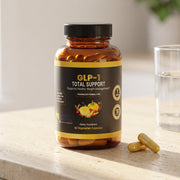
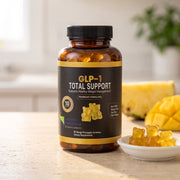
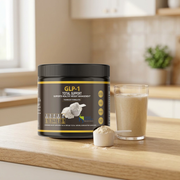
GLP-1 Total Support Powder from Summit Nutritions lists 12 g of instantized yeast protein per scoop. Summit Nutritions identifies this as the formula’s sole protein ingredient and states that it contributes 10 g of protein per scoop. Those two figures describe the ingredient weight and its protein contribution.
The formula also brings several other ingredients together in the same scoop.
· A 3 g fiber blend containing beta glucan, inulin and resistant dextrin.
· L-glutamine, listed separately at 1 g per serving.
· A 50 mg digestive enzyme blend containing protease, amylase and cellulase.
· Vitamin B6 at 1.7 mg, vitamin B12 at 50 mcg, niacin at 16 mg and vitamin D3 at 50 mcg.
· Sodium at 50 mg and potassium at 150 mg.
· A natural cookie butter flavor blend.
This is an example of a powder that combines a protein ingredient with a fiber blend in one scoop. The 3 g is the total weight of the named fiber blend. Individual fiber quantities and enzyme activity units would require additional manufacturer information.
How to use that information
The manufacturer-stated 10 g protein contribution gives you a number to include when planning the drink or snack. Keep that protein contribution separate from the total scoop weight and the separately listed L-glutamine. If you add a liquid or food that contains protein, include its labeled amount when estimating the prepared serving.
The other listed ingredients help describe the kind of formula you are choosing. You can compare the vitamins and minerals with those in other products you use, and check whether a powder with a fiber blend fits your preferences. The cookie butter flavor also gives you a starting point for pairings such as banana, cinnamon, or plain oats.
Choosing a powder that fits your routine

Start with the way you plan to use it
Think about when a powder would be useful. If breakfast is usually oats and fruit, you might want something that stirs into that meal. If you prefer a drink with your afternoon snack, flavor and the amount of liquid needed may matter more.
A powder can contribute to your daily protein intake alongside foods such as beans, tofu, yogurt, eggs or other options that fit your diet. Your preferred foods and the rest of your meals help determine whether a particular serving size is convenient.
Picture an ordinary day
A useful place to start is a meal you already make. If you usually have overnight oats, consider whether a powder would fit the flavor and texture you enjoy. If you tend to leave home with only a drink, consider how you would prepare it and what you would eat alongside it.
For a snack at home, you might prefer a yogurt bowl with fruit. For something portable, you might prefer a shaker prepared according to the product directions. The practical details, including access to a blender, refrigerator, or clean shaker, can make one option easier to repeat.
Consider the whole formula
· Read the serving directions. Compare products using their recommended serving sizes.
· Check all ingredients. A flavored powder may include additional nutrients, fiber ingredients, and other components.
· Consider your preferences. Flavor, texture, and the foods you enjoy mixing it with can help narrow your choices.
· Look for clear product information. Ingredient identity, protein grams, and accessible label details make comparison easier.
Research on an ingredient is most helpful when you can see how closely it matches the ingredient in your powder. Details such as the protein source, preparation method, and amount studied give the findings context.
Compare value using the serving you will actually use
Price per container can be hard to compare when tubs hold different numbers of servings. Divide the price by the labeled serving count to see the cost of one serving. For example, a $45 container with 30 servings costs $1.50 per serving.
Then consider the protein amount, the rest of the formula, and how you plan to use it. A small scoop that fits into your usual breakfast may serve a different purpose from a larger shake. Choosing around your intended use makes the comparison more meaningful.
Easy ways to use fermented protein powder
Start with the serving size and mixing directions on your label. If your powder can be stirred into food, try a flavor pairing you already like.
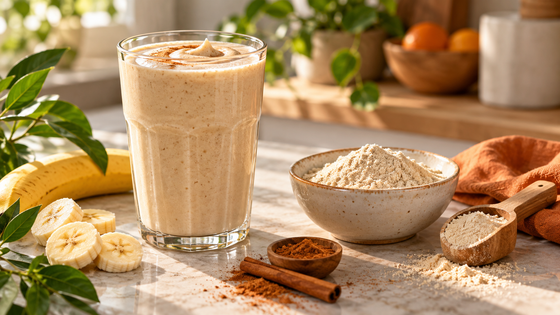
Banana and cinnamon smoothie
A banana smoothie is an easy place to try a vanilla or cookie butter flavor. Choose your usual milk or milk alternative, a banana, and a pinch of cinnamon. Use the amount of powder recommended on the label.
· Pour the liquid into the blender first.
· Add the powder gradually, followed by the banana and cinnamon.
· Blend, check the thickness, and add a little more liquid if you prefer.
For your first try, keep the ingredients simple. Once you like the base, you can experiment with a spoonful of nut butter or a few oats. Those additions change the texture and nutrition of the finished smoothie, so include them when estimating what the drink provides.
Overnight oats
If the powder’s directions allow mixing into food, overnight oats offer a convenient way to prepare breakfast ahead. Choose oats, your usual liquid, and a flavor combination you enjoy. Cinnamon, banana or berries can pair well with a mild, sweet powder.
· Mix the powder with the liquid before adding the oats.
· Stir thoroughly so you can check for dry pockets.
· Cover and refrigerate according to your usual overnight oats recipe.
· Stir again before eating and add a splash of liquid if the mixture is thicker than you like.
Start with a recipe you already use. Keeping the oat portion familiar makes it easier to judge how the added powder changes the texture. Follow the product’s preparation and storage directions as well.
Yogurt and berry bowl
For a spoonable snack, plain yogurt gives you room to adjust the flavor with fruit. The yogurt you choose also contributes to the finished bowl’s protein amount, so check its label if you are keeping track.
· Place the yogurt in a bowl and stir in the powder a little at a time.
· Mix until the texture is even, adding a little suitable liquid if needed.
· Top with berries, sliced banana, or another fruit you enjoy.
You can keep the topping simple or add a little granola for a different texture. If you find the bowl too thick, adjust the yogurt or liquid quantity the next time while keeping the powder within its recommended serving.
Make the texture your own
For a thinner drink, add more of the liquid recommended on the label. For a spoonable snack, use a smaller amount of liquid within the product’s preparation guidance or stir it into yogurt. Use the recommended quantity of powder, then adjust the food or liquid around it to suit your preference.
Try one combination at a time. For example, start with powder and your usual milk alternative before adding fruit, oats, or nut butter. This makes it easier to find the flavor and thickness you enjoy.
Common questions about fermented protein powder
Is yeast protein a vegan option?
Yeast is a fungal protein source. Whether a finished powder fits a vegan diet depends on all of its ingredients, including added vitamins and flavor ingredients. Check the finished product’s labeling and manufacturer information.
For everyday use, think about the complete snack as well. If you prefer a vegan option, pair a suitable powder with a milk alternative or yogurt alternative that also meets your preferences. The final drink or bowl reflects every ingredient you add.
Does fermentation mean easier digestion?
For a digestion claim, look for evidence about the particular ingredient and outcome. A helpful question for the manufacturer is whether the supporting research tested its protein ingredient, at a relevant amount, and measured the effect described. A mixing test or a protein content measurement answers a different question.
When comparing labels, look at the full ingredient list and preparation directions. If you have a question about how a particular ingredient suits you, ask a qualified healthcare professional who can consider your individual needs. A broad description of fermentation gives less detail than information about the specific formula.
Does the powder need to contain live yeast?
Protein from yeast can be used as a food ingredient after processing. Whether live microbes remain is a separate question that depends on the finished product. Fermentation research distinguishes between the production process, live cultures, and demonstrated probiotic properties (Caffrey et al., 2025).
For practical label reading, keep the ingredient’s name separate from any live culture information. A yeast protein ingredient identifies the protein source. Information about live cultures would need to describe what is present in the finished product.
How do I compare two different scoop sizes?
Compare the grams of protein supplied by each recommended serving. If one powder provides 10 g of protein and another provides 15 g, those are the amounts to use in your comparison, even when the scoops look similar. Then consider whether the serving also includes ingredients you want, such as a fiber blend.
Use the scoop supplied with each product and follow its directions. Scoops can have different volumes, and the amount of powder they hold depends on the powder itself. If you need a weight measurement, follow the serving weight and measurement guidance given by the manufacturer.
Can I add it to foods instead of making a shake?
If the product’s directions allow it, a powder can be mixed into foods such as oats or yogurt. Start with a small portion of your food, mix until the texture is even, then combine it with the rest. Flavor matters here, so choose a pairing that sounds good to you.
For a new pairing, prepare one serving before making a larger batch. You can check whether you like the flavor, how easily it mixes, and how much liquid you prefer. Keep the full preparation simple enough that it fits the meal or snack you had in mind.
References
Caffrey, E. B., Perelman, D., Ward, C. P., Sonnenburg, E. D., Gardner, C. D., & Sonnenburg, J. L. (2025). Unpacking food fermentation: Clinically relevant tools for fermented food identification and consumption. Advances in Nutrition, 16(5), Article 100412. https://doi.org/10.1016/j.advnut.2025.100412
Hilgendorf, K., Wang, Y., Miller, M. J., & Jin, Y.-S. (2024). Precision fermentation for improving the quality, flavor, safety, and sustainability of foods. Current Opinion in Biotechnology, 86, Article 103084. https://doi.org/10.1016/j.copbio.2024.103084
Kaleda, A., Sharma, N., Jakobson, K., Stulova, I., & Rosenvald, S. (2025). Fermentation by lactic acid bacteria during pea protein isolation reduces undesirable flavors and changes techno-functional properties. Food Chemistry, 492, Article 145380. https://doi.org/10.1016/j.foodchem.2025.145380
Martin, G. J. O., & Chan, S. (2024). Future production of yeast biomass for sustainable proteins: A critical review. Sustainable Food Technology, 2(6), 1592-1609. https://doi.org/10.1039/D4FB00164H
Ren, Y., Jia, F., & Li, D. (2024). Ingredients, structure and reconstitution properties of instant powder foods and the potential for healthy product development: A comprehensive review. Food & Function, 15(1), 37-61. https://doi.org/10.1039/D3FO04216B
Timira, V., Chen, X., Zhou, P., Wu, J., & Wang, T. (2024). Potential use of yeast protein in terms of biorefinery, functionality, and sustainability in food industry. Comprehensive Reviews in Food Science and Food Safety, 23(3), Article e13326. https://doi.org/10.1111/1541-4337.13326
Zhao, Y., Han, Z., Zhu, X., Chen, B., Zhou, L., Liu, X., & Liu, H. (2024). Yeast proteins: Proteomics, extraction, modification, functional characterization, and structure: A review. Journal of Agricultural and Food Chemistry, 72(34), 18774-18793. https://doi.org/10.1021/acs.jafc.4c04821