

Everything You Need to Know About Yeast Protein
Last Updated: 10/22/2026
Written By: Sanskriti Pandey (Senior Marketing Analyst)
Reviewed By: Sam Salia (Founder and Pharmacist)
Yeast protein is dietary protein obtained from yeast cells. It offers another protein source alongside familiar options such as whey, soy, and pea protein.
If you have noticed it on a supplement label, you may have a few questions. Is it the same as nutritional yeast? Is it suitable for a vegan diet? What does the research say about digestion?
The answers start with understanding the ingredient.
Yeast protein is a category, rather than one identical ingredient used in every product. The yeast species, growing conditions, processing methods, and finished formula can influence its composition and use.
Summit Nutritions is a premium supplement brand based in New Jersey that sells wellness products made using yeast protein. This guide explains the basics, explores recent research, and shares practical ways to compare products without making the process complicated.
Yeast Protein at a Glance
Here are the main things to know:
- Source: Yeast, which belongs to the fungi family.
- Production: Controlled cultivation followed by processing into a food ingredient.
- Form: Ingredients can differ in protein concentration and other components.
- Research: Recent studies have examined nutritional quality and digestibility using different ingredients and testing methods.
- Shopping focus: Check the specific ingredient, protein per serving, complete formula, and preparation directions.
Recent reviews discuss yeast as a potential food protein source and explain why production and processing details matter (Timira et al., 2024; Martin & Chan, 2024).
What Is Yeast Protein?
Yeast protein refers to protein present in, or obtained from, yeast cells.
Some commercial ingredients retain more of the yeast’s original components. Others undergo additional processing to release, separate, or concentrate the protein.
The ingredient name alone does not tell you its exact protein concentration, amino acid profile, or nutritional composition.
Is Yeast a Plant?
No. Yeast is a fungus.
That makes yeast protein different from protein extracted from plants such as peas, soybeans, or rice.
It also explains why “vegan protein” and “plant protein” are not always interchangeable descriptions. A yeast ingredient may be suitable for vegan diets even though it does not come from a plant.
The suitability of a finished product still depends on its full formula and sourcing.
Why Are Food Researchers Interested in It?
A 2024 review in Comprehensive Reviews in Food Science and Food Safety examined yeast protein as an alternative to animal and plant protein sources.
The review discussed extraction methods and potential food applications, highlighting the importance of how the ingredient is processed (Timira et al., 2024).
For shoppers, the useful question is which ingredient a product contains and what that ingredient contributes in a labeled serving.
How Is Yeast Protein Made?
Production generally involves growing yeast, collecting the cells, and processing them into a usable ingredient.
Step 1: Grow the Yeast
A selected yeast is cultivated with nutrients under controlled conditions.
This is often described commercially as fermentation based production. When the aim is to grow yeast biomass, manufacturers may supply oxygen to encourage efficient growth.
Step 2: Collect the Cells
The yeast cells are separated from the growing medium.
Step 3: Process the Ingredient
Depending on its intended use, the material may undergo further processing to release, separate, or concentrate protein before drying and formulation.
A 2024 review in Sustainable Food Technology explains how yeast selection and growth conditions can influence the resulting biomass (Martin & Chan, 2024).
The exact process varies by ingredient. A general explanation of yeast cultivation should not be treated as a description of every supplier’s manufacturing method.
Is Yeast Protein the Same as Nutritional Yeast?
Yeast protein powder and nutritional yeast seasoning are usually different preparations.
Nutritional yeast also provides protein. A concentrated yeast protein ingredient, however, is processed for a particular protein content and food application.
Compare their labels, serving sizes, and intended uses rather than assuming they are interchangeable.
Understanding Common Yeast Products
| Product | Common purpose | What to check |
|---|---|---|
| Yeast protein powder | Providing a measured amount of dietary protein | Protein per serving, ingredient identity, and complete formula |
| Nutritional yeast | Seasoning foods, often sold as flakes or powder | Serving size, protein content, and whether vitamins are added |
| Baker’s yeast | Helping dough rise | Intended baking use and preparation instructions |
| Probiotic yeast product | Providing a specified live microorganism | Strain identity, viable amount, and evidence for its intended use |
For example, a savory nutritional yeast seasoning may suit pasta or popcorn. That does not tell you how a flavored yeast protein powder will taste in a smoothie.
Likewise, a protein ingredient should not be assumed to work like baker’s yeast in a recipe.
What Does Research Say About Yeast Protein?
Recent research offers useful information about particular ingredients. Understanding what was tested helps put the findings into context.
Two common research questions are:
- What is the ingredient’s amino acid composition?
- How does it behave during digestion?
These questions help describe nutritional quality. They do not, by themselves, establish a health benefit from a finished supplement.
Research on Nutritional Quality
A study published in Food Chemistry in 2025 compared yeast protein with selected animal and plant proteins using growing rats and a laboratory digestion model.
Researchers examined amino acid composition and protein quality measures. The tested yeast protein showed promising nutritional characteristics, although its digestibility was lower than the comparison proteins under those conditions.
This was animal and laboratory research, rather than a human supplementation trial (Cao et al., 2025).
Research on Digestibility
A separate 2025 study in Food Research International compared a specific yeast protein ingredient with whey and casein using a laboratory digestion model.
The authors reported:
“YBP, casein and whey were comparable in terms of digestibility.”
YBP means yeast based protein. The finding supports interest in the tested ingredient, but it does not establish identical performance for every yeast protein. The authors disclosed employment with Lesaffre and ProDigest (Caron et al., 2025, Abstract).
Why Can Research Findings Differ?
Studies may use different ingredients, processing methods, comparisons, and testing approaches.
Their findings should therefore be considered individually. It would be inaccurate to turn them into a blanket statement that yeast protein always digests better than, or exactly like, another protein source.
How to Read a Research Claim
Look for explanations that identify:
- The ingredient tested.
- Whether the study involved people, animals, or laboratory models.
- The comparison used.
- The outcome measured.
- Whether the finished product itself was tested.
That context is more helpful than a broad statement such as “research proven.”
Is Yeast Protein a Complete Protein?
Some yeast protein ingredients can provide an essential amino acid profile that meets a specified reference pattern. The specific ingredient should be checked before making a complete protein claim.
The phrase “complete protein” is commonly used to describe protein that provides the nine essential amino acids in adequate proportions.
However, amino acid composition is only one part of protein quality. Digestibility also matters, while the total protein amount in a serving is a separate measurement.
The 2025 Food Chemistry study examined these distinctions rather than treating protein quality as a single label (Cao et al., 2025).
If this feature matters to you, look for an amino acid profile or ask the brand for ingredient specific documentation. A general category description cannot establish the profile of an individual product.
How Does Yeast Protein Compare With Other Protein Sources?
Yeast, whey, pea, and soy proteins come from different sources. Choosing between them involves the finished product as well as its main protein ingredient.
| Protein source | Origin | Useful comparison points |
|---|---|---|
| Yeast protein | Yeast | Ingredient specifications, protein per serving, flavor, and complete formula |
| Whey protein | Milk | Milk allergen information, product composition, and protein per serving |
| Pea protein | Peas | Ingredient specifications, amino acid information, and preparation |
| Soy protein | Soybeans | Soy allergen information, product composition, and protein per serving |
There is no need to choose based on a broad “best protein” label.
Instead, consider the details that affect your decision:
- Does the full formula fit your dietary preferences?
- How much protein does one serving provide?
- Do you enjoy the taste and texture?
- Is preparation convenient?
- Is the research relevant to the ingredient being used?
A product can be worth considering without needing to outperform every other option.
What Does Yeast Protein Taste Like?
There is no single flavor shared by every yeast protein product.
The ingredient, processing, flavorings, sweeteners, and preparation all contribute to the finished experience.
Do not assume that a yeast protein shake will taste like bread dough or nutritional yeast seasoning. Those preparations have different intended uses.
Start With the Recommended Preparation
Before creating a smoothie recipe:
- Measure the labeled serving.
- Add the recommended amount of liquid.
- Follow the suggested mixing method.
- Taste the prepared product.
This gives you a clearer starting point before adding other ingredients.
Explore Familiar Flavor Pairings
If the powder’s flavor suits the recipe and the label permits that preparation, you might try:
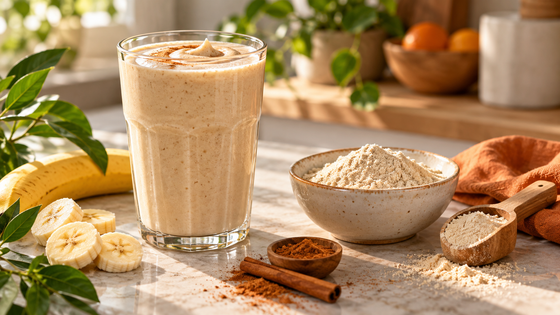
- Banana and cinnamon.
- Cocoa with an unsweetened plant beverage.
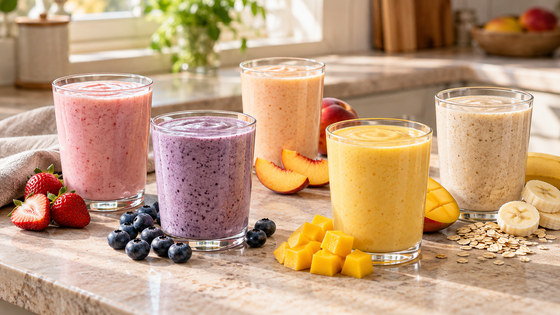
- Berries with a compatible lightly flavored powder.
- A simple preparation using water or a plant beverage.
You do not need several ingredients. A drink you enjoy and can prepare easily may be the most practical choice.
Is Yeast Protein Suitable for Vegan Diets?
Yeast itself is not an animal ingredient. A yeast protein ingredient may therefore be suitable for vegan diets.
However, check the whole product.
A finished formula may contain vitamins, flavorings, processing aids, or other ingredients whose sourcing needs confirmation.
Useful questions for a brand include:
- Is the entire formula suitable for vegans?
- What documentation supports that description?
- Are there relevant certifications?
- What allergen information applies to the finished product?
This is especially helpful when a formula contains several ingredients beyond protein.
Does Yeast Protein Mean Dairy Free or Allergen Free?
The source of one ingredient does not establish the status of the entire formula.
Read the complete ingredient list and allergen statement. If you need to avoid a particular allergen, ask about the finished product and relevant manufacturing information.
Avoid relying on assumptions such as:
- A yeast protein ingredient means the formula cannot contain milk.
- A vegan description means the product is suitable for every food allergy.
- Products using the same protein source have identical allergen information.
Clear product information is more useful than broad category labels.
Does Yeast Protein Contain Probiotics?
The presence of yeast protein alone does not establish that a product contains live probiotics.
A probiotic product needs information about the microorganisms it provides, including defined strains and amounts, along with evidence for a health benefit.
The International Scientific Association for Probiotics and Prebiotics explains that microorganisms involved in fermentation do not automatically qualify as probiotics (ISAPP, 2025).
If probiotics are a feature you want, look for specific product information rather than assuming that “yeast” or “fermented” means probiotic.
Is Yeast Protein Sustainable?
Yeast protein has potential as an alternative protein production route, but sustainability depends on how it is produced.
A 2024 review states:
“Yeast biomass has untapped potential as a sustainable source of nutritional protein.”
The review explores production opportunities and research gaps. It does not establish the environmental footprint of every commercial product (Martin & Chan, 2024, Abstract).
For a specific environmental claim, look for evidence explaining the production process and the comparison being made.
Descriptions such as “sustainable” are more informative when supported by relevant product or supply chain data.
How Much Protein Does a Yeast Protein Powder Provide?
The amount depends on the ingredient, formula, and serving size.
Ingredient weight and protein content are different measurements. A product can contain 12 g of a yeast protein ingredient without providing 12 g of protein.
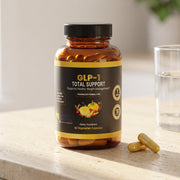
An Example From GLP-1 Total Support Powder
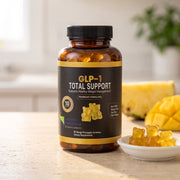
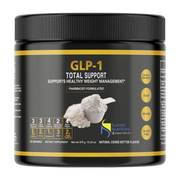
Our GLP-1 Total Support Powder uses an instantized yeast protein ingredient.
The current serving information is:
- Serving size: 1 scoop.
- Servings per container: 30.
- Yeast protein ingredient: 12 g per serving.
- Protein provided: 10 g per serving.
- Dietary fiber: 3 g per serving.
These are product formulation details. They should be considered separately from the journal research discussed above.
The 12 g ingredient amount and the 10 g protein amount describe different measurements and should not be added together.
How to Calculate Protein in Your Drink
If you prepare one scoop in water, the powder contributes 10 g of protein.
If the amount of plant beverage you add provides 4 g of protein, the combined drink would provide approximately 14 g.
Use the labels of all ingredients to calculate your recipe’s total.
What About Stick Packs?
GLP-1 Total Support Powder is also planned for stick packs.
Individual portions may offer a convenient option for carrying to work or packing for travel. Check the final stick pack label for serving and preparation information when that format becomes available.
How to Choose a Yeast Protein Product
A few practical checks can help you compare options.
Check the Protein Amount
Look at grams of protein per labeled serving.
A larger scoop or a larger amount of protein ingredient does not automatically mean a higher protein contribution.
Read the Complete Formula
Consider flavorings, sweeteners, added fiber, vitamins, minerals, and other ingredients.
Choose based on the whole product.
Review Quality Information
Look for clear information about the manufacturer, ingredient identity, and any testing or certifications claimed.
If a certification matters to you, check what it covers.
Keep Research Claims in Context
A laboratory study provides evidence about the conditions tested. It does not automatically establish a health benefit in people.
Likewise, adding “may” or “supports” to a statement does not replace the need for relevant evidence.
Choose a Format That Fits Your Day
Think about when preparation would be convenient.
A powder may fit alongside breakfast, in a familiar smoothie, or at work when you have the right setup.
Follow the product’s directions and consider its contribution alongside the rest of your food.
Frequently Asked Questions About Yeast Protein
Is Yeast Protein Better Than Whey?
There is no universal answer. Research findings depend on the ingredients and testing methods used. Your choice also depends on dietary preferences, allergen needs, serving information, and taste.
Is Yeast Protein the Same as Nutritional Yeast?
Nutritional yeast also contains protein, but nutritional yeast seasoning and concentrated yeast protein ingredients are usually different preparations. Compare their labels and intended uses.
Does Yeast Protein Reduce Bloating?
The digestion studies discussed here do not establish reduced bloating in people. Digestibility and digestive comfort are different outcomes.
Does Yeast Protein Provide All the Vitamins in a Supplement?
Not necessarily. A finished formula may include separately added vitamins, minerals, fiber, and other ingredients. Do not attribute the entire supplement panel to its yeast protein ingredient.
Can a Yeast Protein Powder Replace a Meal?
A protein powder is not automatically a complete meal replacement. Follow its intended use and consider what it contributes alongside your meals and snacks.
How Much Should I Use?
Follow the product’s labeled directions. The amount that fits your overall diet depends on your food intake and individual needs.
Making Sense of Your Next Protein Choice
Yeast protein offers another source to consider when comparing protein products.
Start with a few straightforward questions:
- Which ingredient does the product contain?
- How much protein does one serving provide?
- Does the complete formula fit your preferences?
- Is the research relevant to that ingredient?
- Will you enjoy preparing and using it?
You do not need to understand every manufacturing detail to make an informed choice. Clear labels and carefully explained evidence can help you decide whether yeast protein fits your routine.
The studies discussed in this article did not test GLP-1 Total Support Powder. They do not establish digestive, weight management, or GLP-1 effects for the finished product.
References
Cao, X., Liu, H., Yang, M., Mao, K., Wang, X., Chen, Z., Ran, M., & Hao, L. (2025). Evaluation of the nutritional quality of yeast protein in comparison to animal and plant proteins using growing rats and INFOGEST model. Food Chemistry, 463, Article 141178. https://doi.org/10.1016/j.foodchem.2024.141178
Caron, J., Martinez Tuppia, C., Machuron, F., Ghyselinck, J., Van Meulebroek, L., De Munck, J., Doniol-Valcroze, N., Ding, C., Parent, E., Gastel, S., Telki-Baeyens, S., Spolaore, P., Mouly, I., Menin, R., Oriol, E., Bosco, N., & Koper, J. E. B. (2025). In vitro human gastrointestinal digestibility and colonic fermentation of edible yeast-based protein: A comparative study with whey and casein. Food Research International, 208, Article 116098. https://doi.org/10.1016/j.foodres.2025.116098
International Scientific Association for Probiotics and Prebiotics. (2025, September 10). Do all fermented foods contain a probiotic? https://isappscience.org/resource/do-all-fermented-foods-contain-a-probiotic/
Martin, G. J. O., & Chan, S. (2024). Future production of yeast biomass for sustainable proteins: A critical review. Sustainable Food Technology, 2(6), 1592-1609. https://doi.org/10.1039/D4FB00164H
Timira, V., Chen, X., Zhou, P., Wu, J., & Wang, T. (2024). Potential use of yeast protein in terms of biorefinery, functionality, and sustainability in food industry. Comprehensive Reviews in Food Science and Food Safety, 23(3), Article e13326. https://doi.org/10.1111/1541-4337.13326