

Top 3 Reasons You Should Try Fermented Vegan Protein
Last Updated: 10/22/2026
Written By: Sanskriti Pandey (Senior Marketing Analyst)
Reviewed By: Sam Salia (Founder and Pharmacist)
Finding a protein powder that fits your day involves more than checking the number on the label. You may also want to know where the protein comes from, how it is made, and whether you will enjoy using it.
Fermented vegan protein is one option to explore.
Perhaps you have seen it listed on a product page or heard about yeast protein and wondered how it compares with more familiar choices. The terminology can sound technical, but the basics are fairly simple.
Fermentation can be used to change an existing plant ingredient or to grow microorganisms that become a source of protein. Researchers are studying both approaches, including how they influence the qualities of food ingredients.
For shoppers, there are three useful reasons to take a closer look: the emerging digestibility research, the possibilities for flavor development, and the convenience of another protein option. Summit Nutritions is a premium supplement brand based in New Jersey that sells wellness products made using fermented vegan protein.
Here is what the research suggests, along with practical ways to decide whether fermented vegan protein fits your routine.
What Is Fermented Vegan Protein?
Fermented vegan protein is a broad term. Understanding the specific ingredient helps you make sense of the product and any research behind it.
Fermented Plant Protein
Some ingredients start with a plant source, such as soy or lentils, that undergoes fermentation.
During this process, microorganisms change components of the starting material. Researchers may then examine changes in protein digestibility, aroma, texture, or other food qualities.
Protein Produced Through Yeast Fermentation
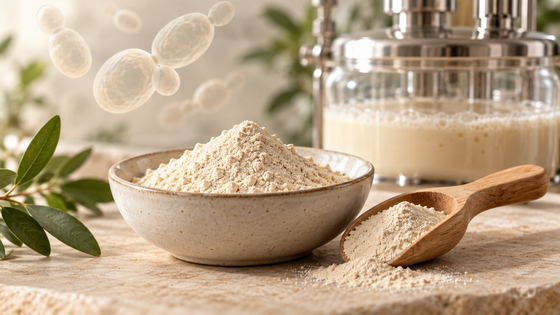
Yeast protein follows a different approach. Yeast is grown under controlled conditions and processed to obtain a protein ingredient.
Yeast belongs to the fungi family. It is therefore different from protein extracted from plants such as peas or rice.
A 2024 review in Comprehensive Reviews in Food Science and Food Safety examined yeast protein as an alternative to animal and plant protein sources, including how extraction methods influence its potential food applications (Timira et al., 2024).
Why This Difference Matters
A study about fermented lentils does not establish the same findings for yeast protein.
Likewise, research on a specific yeast protein ingredient does not automatically apply to every powder containing yeast protein.
When reading a product description, start with one question: what is the actual protein source?
That answer gives you a much clearer starting point than the word “fermented” alone.
1. There Is Growing Research Into Protein Digestibility
One reason to explore fermented vegan protein is the research into how particular ingredients behave during digestion.
Digestibility describes how well a protein is broken down during digestion. It is one part of understanding a protein ingredient’s nutritional qualities.
What Research on Fermented Plant Foods Suggests
A 2024 review in the Annual Review of Food Science and Technology examined fermented plant foods, including tempeh, sufu, and natto.
The review discussed how fermentation can change the food and reduce certain compounds that interfere with protein digestion.
The authors wrote:
“These fermentations improve the protein digestibility of the plant food materials”
This excerpt refers to the plant foods covered in that review. It supports interest in those fermentation processes, rather than a general promise about every fermented protein powder (Canoy et al., 2024).
What a Recent Yeast Protein Study Found
A 2025 study in Food Research International compared a specific yeast protein ingredient with whey and casein in a laboratory digestion model.
The researchers reported:
“YBP, casein and whey were comparable in terms of digestibility.”
YBP means yeast based protein. The finding supports further interest in the tested ingredient as an alternative protein source. However, this was laboratory research, not a human supplementation trial. The authors also disclosed employment with Lesaffre and ProDigest (Caron et al., 2025).
What This Means for Your Shopping Decision
These findings give you something useful to explore, but they do not make all fermented proteins interchangeable.
For example, imagine comparing two powders:
- One clearly identifies its protein source and provides information about the ingredient.
- Another uses a general description without explaining what the protein is.
The first makes it easier to understand what you are buying and whether the research being discussed is relevant.
A Simple Way to Read Research Claims
Look for answers to these questions:
- Was the study about the same type of protein?
- Did it test an ingredient or a finished product?
- Was it conducted in a laboratory or in people?
- Does the product description explain those differences?
Also remember that protein digestibility and stomach comfort are different questions. Laboratory digestibility findings do not establish that a powder will reduce bloating or feel easier on your stomach.
2. Fermentation Offers Possibilities for Flavor Development
A protein powder needs to fit your preferences as well as your routine.
You might enjoy a lightly flavored drink, a fruit smoothie, or something that pairs with cinnamon and banana. Whatever your preference, taste matters when choosing a product you plan to use regularly.
Fermentation is one of the tools food researchers explore when developing different flavor experiences.
What the Flavor Research Shows
A 2024 study in the Journal of Food Science examined fermented lentil protein isolate.
Researchers identified new aroma compounds and described potential for changes in sensory qualities.
Their practical application statement noted:
“Fermented lentil protein isolate has promising flavor profiles that may improve its sensory properties for food application.”
These findings concern lentil protein. They do not establish how yeast protein tastes or whether consumers will prefer a particular powder. The same study also found lower digestibility in the fermented samples, showing that changes in one quality do not guarantee improvements in another (Shi et al., 2024).
Why Your Finished Drink Still Matters
A research finding about an ingredient is only part of the flavor story.
Your experience with a powder also depends on:
- The complete formula.
- Flavoring and sweetening ingredients.
- The amount of liquid used.
- Whether you shake, stir, or blend it.
- The other ingredients in your drink.
- Your personal preferences.
For that reason, it is better to explore a product’s actual flavor and preparation directions than assume fermentation guarantees a particular taste.
Simple Ways to Explore Flavor Pairings
Start by preparing the powder according to its label. This gives you a clear sense of the product before adding other ingredients.
Once you know its flavor, consider a combination you already enjoy.
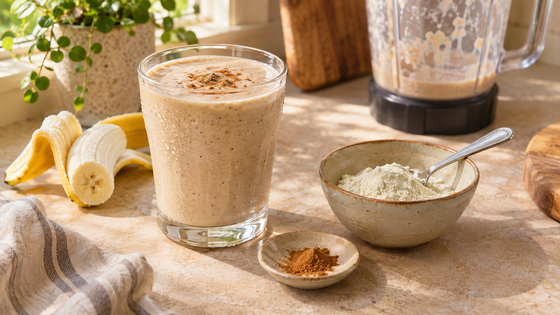
A Banana and Cinnamon Smoothie
For a compatible flavor, try:
- Your protein powder at the labeled serving.
- An unsweetened plant beverage.
- Half a banana.
- A small amount of cinnamon.
Follow the product’s preparation directions and adjust the recipe to your taste.
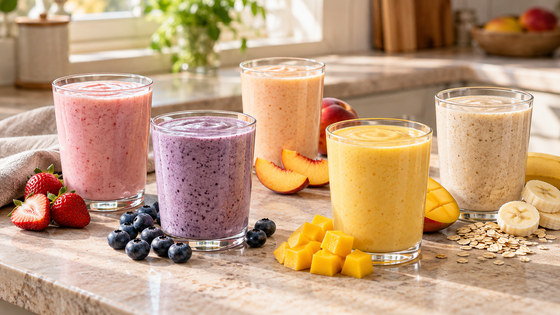
A Berry Based Drink
Berries may suit a lightly flavored powder. Think about how the powder’s flavor will work with the fruit before combining them.
A cookie butter flavored formula, for example, may suit a different recipe from an unflavored powder.
A Simple Preparation for Busy Days
You do not need several ingredients to make a protein powder part of your routine.
If the label permits preparation with water or a plant beverage, begin there. A simple drink may be the most practical option when you are short on time.
Give Texture Some Attention
Before deciding whether a powder suits you:
- Measure the serving as directed.
- Use the recommended liquid amount.
- Follow the suggested mixing method.
- Check whether the label provides options for preparation.
These small details can help you evaluate the product as intended.
3. It Gives You Another Convenient Protein Option
The third reason is practical: a powder containing fermented vegan protein can offer another way to add a measured amount of protein to your day.
This convenience comes from the product’s format and serving information. It is not a special benefit established by fermentation research.
For someone who wants more variety in protein sources, that additional choice may still be useful.
Start With a Routine You Already Have
Think about when you would realistically prepare the product.
For example:
- Alongside your usual breakfast.
- In a smoothie you already make.
- At work, where preparation is convenient.
- While traveling, if you can carry and prepare it as directed.
You do not need to build a new meal schedule around a powder. It can be considered alongside the foods and habits already in your day.
Understand Ingredient Weight and Protein Content
When comparing products, pay attention to two different measurements:
- The amount of the protein ingredient.
- The amount of protein that ingredient provides.
They are not always the same.
A protein ingredient may contain components other than protein, so its total weight can be higher than its protein contribution.
An Example From GLP-1 Total Support Powder
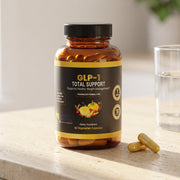
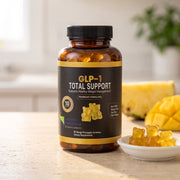
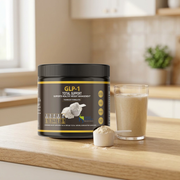
Our GLP-1 Total Support Powder contains 12 g of the yeast protein ingredient per serving, identified on the supplied ingredient information as instantized yeast protein.
That ingredient provides 10 g of protein.
The current serving details are:
- Serving size: 1 scoop.
- Servings per container: 30.
- Yeast protein ingredient: 12 g per serving.
- Protein provided: 10 g per serving.
- Dietary fiber: 3 g per serving.
The 12 g ingredient amount and the 10 g protein amount describe different measurements. They should not be added together.
How to Count Protein in Your Drink
If you prepare one scoop in water, the powder contributes 10 g of protein.
If you add a plant beverage, yogurt alternative, or other ingredients, use their labels to calculate the protein they contribute.
For example, if the amount of plant beverage you use provides 4 g of protein, combining it with one scoop would provide approximately 14 g in total.
This makes it easier to compare recipes and understand what is in your finished drink.
What About Stick Packs?
GLP-1 Total Support Powder is also planned for stick packs.
Individual portions may offer a convenient format for carrying to work or packing for travel. The current container uses a 1 scoop serving. Check the final stick pack label for serving and preparation details when that format becomes available.
How to Compare Fermented Vegan Protein Products
A few clear questions can make shopping more straightforward.
What Is the Protein Source?
Look for a specific ingredient name.
Knowing whether a product contains yeast protein, fermented soy, or another source helps you understand the formula and the relevance of any research cited.
How Much Protein Does One Serving Provide?
Compare the declared grams of protein per serving.
Do not assume that:
- A larger scoop contains more protein.
- A larger ingredient amount means a larger protein contribution.
- Every product uses the same serving size.
Also check the servings per container when considering how the product fits your routine.
Does the Full Formula Suit Your Preferences?
Read the entire ingredient list, including:
- Flavorings and sweeteners.
- Added fiber.
- Vitamins and minerals.
- Allergen information.
- Other ingredients you prefer to include or avoid.
If you follow a vegan diet, confirm the suitability of the whole formula. A vegan protein ingredient alone does not confirm the origin of every other ingredient.
Are the Claims Specific?
Useful product information explains what a finding actually means.
Look for a clear distinction between laboratory research and human studies, as well as ingredient research and finished product research.
That context helps you assess the information without needing to become a food scientist.
Frequently Asked Questions About Fermented Vegan Protein
Is Yeast Protein the Same as Plant Protein?
No. Yeast is a fungus, while plant proteins come from sources such as peas, soy, or rice.
They are different ingredient categories, even when both are considered as alternatives to animal protein sources (Timira et al., 2024).
Does Fermentation Guarantee Better Digestibility?
No. The outcome depends on the ingredient and processing conditions.
The studies discussed here show why specific evidence matters. Findings for one fermented food or protein cannot establish the same outcome for every product.
Does 12 g of a Protein Ingredient Mean 12 g of Protein?
Not necessarily.
In GLP-1 Total Support Powder, the 12 g amount refers to the yeast protein ingredient. It provides 10 g of protein per serving.
Use the declared protein amount when calculating the protein in your drink.
Can I Use a Protein Powder as a Meal Replacement?
Follow the product’s intended use and label directions.
A product that provides protein is not automatically formulated as a complete meal replacement. Consider what it contributes alongside the rest of your food.
Do I Need a Complicated Smoothie Recipe?
No. Begin with the preparation directions on the label.
If you enjoy that preparation, there is no need to add more ingredients. If you prefer a smoothie, start with a few familiar ingredients and explore from there.
Finding an Option That Fits Your Day
Fermented vegan protein is worth learning about if you are exploring different protein sources.
Recent research provides useful insights into specific ingredients and fermentation processes. Your everyday choice can then come down to a few practical details:
- A clearly identified protein source.
- A labeled protein amount you understand.
- A formula that suits your preferences.
- A flavor and preparation method you enjoy.
Start with those basics, and choose an option that fits comfortably into the way you already eat.
The studies discussed in this article did not test GLP-1 Total Support Powder. They do not establish digestive, weight management, or GLP-1 effects for the finished product.
References
Canoy, T. S., Wiedenbein, E. S., Bredie, W. L. P., Meyer, A. S., Wösten, H. A. B., & Nielsen, D. S. (2024). Solid-state fermented plant foods as new protein sources. Annual Review of Food Science and Technology, 15(1), 189-210. https://doi.org/10.1146/annurev-food-060721-013526
Caron, J., Martinez Tuppia, C., Machuron, F., Ghyselinck, J., Van Meulebroek, L., De Munck, J., Doniol-Valcroze, N., Ding, C., Parent, E., Gastel, S., Telki-Baeyens, S., Spolaore, P., Mouly, I., Menin, R., Oriol, E., Bosco, N., & Koper, J. E. B. (2025). In vitro human gastrointestinal digestibility and colonic fermentation of edible yeast-based protein: A comparative study with whey and casein. Food Research International, 208, Article 116098. https://doi.org/10.1016/j.foodres.2025.116098
Shi, D., Stone, A. K., Jafarian, Z., Liu, E., Xu, C., Bhagwat, A., Lu, Y., Gao, P., Polley, B., Bhowmik, P., Rajagopalan, N., Tanaka, T., Korber, D. R., & Nickerson, M. T. (2024). Submerged fermentation of lentil protein isolate and its impact on protein functionality, nutrition, and volatile profiles. Journal of Food Science, 89(6), 3412-3429. https://doi.org/10.1111/1750-3841.17111
Timira, V., Chen, X., Zhou, P., Wu, J., & Wang, T. (2024). Potential use of yeast protein in terms of biorefinery, functionality, and sustainability in food industry. Comprehensive Reviews in Food Science and Food Safety, 23(3), Article e13326. https://doi.org/10.1111/1541-4337.13326