

Your Ultimate Guide to Protein Powder for GLP-1 Users
Last Updated: 7/19/2026
Written By: Sanskriti Pandey (Senior Marketing Analyst)
Reviewed By: Sam Salia (Founder and Pharmacist)

Maya used to begin her morning with eggs, toast, and a large cup of coffee.
After starting a GLP-1 medication prescribed by her healthcare provider, breakfast began to feel different. Some mornings, she felt full after only a few bites. By early afternoon, she would realize that she had eaten fruit and toast, but very little protein.
Maya was not trying to avoid nutritious food. Her appetite and usual portions had simply changed.
She began looking for an easier option. Not a cure, not a replacement for her medication, and not a reason to stop eating balanced meals. She simply wanted something that could help her include protein when a full meal felt like too much.
That is where protein powder for GLP-1 users may have a practical place. Summit Nutritions is a premium and affordable supplement brand for protein powder for GLP-1 users.
Recent research suggests that people using GLP-1 based medications may consume fewer calories, but researchers still have limited information about the nutritional quality of those smaller diets. This makes thoughtful food choices an important part of the conversation. (ScienceDirect)
Why Protein Can Feel Harder to Fit Into the Day
GLP-1 medications are often associated with changes in appetite, fullness, food preferences, and total food intake. Some people may also experience digestive discomfort that makes larger meals less appealing. Individual experiences vary, and these changes should always be discussed with the prescribing healthcare provider. (PubMed)
A person who once ate three full meals may begin eating:
- Half of the usual breakfast
- A small lunch
- A few bites at dinner
- Fewer snacks between meals
Smaller portions are not automatically a problem. The concern is whether those portions continue to provide enough protein, fiber, fluids, vitamins, minerals, and total energy for that individual.
Protein powder may be useful because it allows a person to add protein without preparing a large meal. It can be mixed into a smaller amount of food or liquid and adjusted according to appetite and tolerance.
Why Protein Deserves Attention During Weight Changes
Body weight is made up of several parts, including fat, water, bone, organs, and muscle.
When a person loses weight, the change does not come from body fat alone. Some change in fat-free mass may also occur. Fat-free mass and muscle mass are not exactly the same thing, so changes reported in research should be interpreted carefully.
A 2024 systematic review examined six studies involving 1,541 adults who were overweight or had obesity. The researchers found that most of the weight change associated with semaglutide came from fat mass. However, the amount of lean mass change varied considerably across the studies. (PubMed)
This does not mean protein powder prevents muscle loss. Research has not established that a protein supplement alone can produce that result.
Instead, current research discusses adequate protein intake and appropriate physical activity, especially resistance exercise, as supportive parts of a broader plan for maintaining strength and body function during weight loss. (PubMed)
A Simple Way to Think About It
Protein powder is one tool.
It works best as part of a routine that may also include:
- Protein-rich meals and snacks
- Fruits and vegetables
- Appropriate fluid intake
- Regular movement
- Resistance or strength exercises approved by a healthcare provider
- Regular conversations with a physician or registered dietitian
What Recent Research Says
Research about nutrition during GLP-1 medication use is still developing. The following short excerpts show why food quality and protein intake are receiving more attention.
Research excerpt 1
“Total caloric intake was reduced by 16% to 39%.”
This came from a 2024 review of dietary intake among people using GLP-1 and dual GIP and GLP-1 receptor agonists. The authors also explained that few studies carefully measured the nutritional composition of what participants ate. (ScienceDirect)
Research excerpt 2
“Preserving muscle and bone mass through resistance training and appropriate diet.”
This was identified as a nutritional priority in a 2025 joint advisory developed by experts connected with several major nutrition, lifestyle medicine, and obesity organizations. (PubMed)
Research excerpt 3
“Exercise, particularly resistance training, and increased dietary protein intake.”
A 2024 article in the Journal of the Endocrine Society discussed these as two possible supportive measures during weight loss. The authors also noted that more direct research involving GLP-1 treatments is needed.
These excerpts support a careful approach. They do not show that every GLP-1 user needs a protein supplement, or that a supplement can replace meals, exercise, or medical care.
How Much Protein Does a GLP-1 User Need?
There is no single protein target that is right for every person.
Protein needs may depend on:
- Age
- Current body size
- Usual food intake
- Activity level
- Type and amount of exercise
- Rate of weight change
- Existing muscle strength
- Kidney or liver health
- Other medical conditions
- Instructions from the prescribing healthcare provider
Some professional guidance discusses higher protein intake during weight management. However, these ranges are not universal prescriptions and may not be suitable for everyone. A physician or registered dietitian can help set an appropriate personal target. (PubMed)
A More Practical Starting Point
Instead of choosing a number from the internet, consider asking your healthcare provider:
- What daily protein target is appropriate for me?
- Should my target be based on my current weight, goal weight, or estimated lean mass?
- Are there medical reasons I should limit protein?
- Would a protein powder be appropriate with my medications?
- Should I spread protein across several smaller meals?
Once you receive a personal target, you can compare it with what you normally eat. A powder may help fill a gap, but it does not have to provide the entire amount.
What to Look for in Protein Powder for GLP-1 Users
The front of a container may contain several attractive phrases. The nutrition label usually provides more useful information.
Check the Nutrition Label
Protein per serving
Look at the actual number of grams of protein in one serving.
Some powders provide a small supportive amount. Others are designed to provide a larger portion of a person’s daily protein intake. These products may serve different purposes.
Serving size
Check whether the listed protein amount comes from:
- One scoop
- Two scoops
- A full packet
- A prepared shake that also requires milk
This can make a large difference when comparing products.
Total calories
A lower calorie powder is not always better.
A person who is eating very little may need more complete nutrition, while another person may only need a small protein addition. The right choice depends on the rest of the diet and advice from the healthcare provider.
Added sugar and sweeteners
Review the amount of added sugar and the type of sweetener used.
Taste and tolerance matter. Some people prefer a lightly sweetened powder, while others may find certain flavors or sweeteners difficult to tolerate.
Fiber and additional ingredients
Some powders also include:
- Fiber
- Amino acids
- Vitamins
- Minerals
- Digestive enzymes
- Collagen ingredients
- Herbal ingredients
More ingredients do not automatically make a powder more suitable. Look for ingredients that fit your needs and discuss unfamiliar ingredients with a physician or pharmacist.
Consider the Protein Source
Common protein sources include:
- Whey protein
- Casein protein
- Pea protein
- Rice protein
- Soy protein
- Blended plant proteins
There is no single best option for every GLP-1 user.
The choice may depend on allergies, dietary preferences, digestion, taste, texture, and personal nutrition goals.
Look for Quality and Clear Labeling
A trustworthy product should clearly state:
- Protein amount per serving
- Complete ingredient list
- Allergen information
- Serving instructions
- Manufacturer information
- Appropriate warnings
- Whether the product is a dietary supplement or meal replacement
Avoid assuming that a product is a medication simply because the name includes “GLP-1.” Dietary supplements are not substitutes for prescription GLP-1 medications.
How to Add Protein Without Making Meals Feel Too Large
Maya discovered that drinking a large, thick shake first thing in the morning was not comfortable for her.
She changed her approach. She used smaller portions and spread them through the day.
The following examples are not medical instructions. They are simple ideas that can be discussed with a healthcare provider or dietitian.
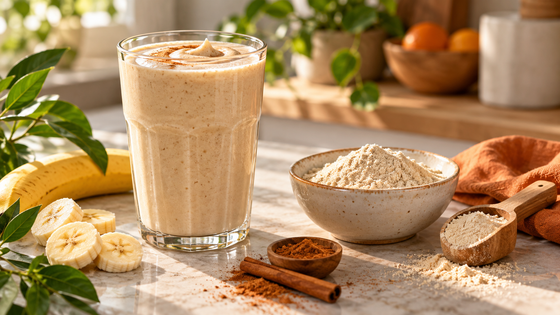
Example 1: A Smaller Morning Smoothie
Blend:
- A partial serving of protein powder
- Milk or a suitable milk alternative
- A few berries
- Ice or water for a lighter texture
A smaller smoothie may feel more manageable than a large breakfast.
Example 2: Protein Added to Yogurt
Stir a small amount of powder into plain Greek yogurt.
Add a little milk or water if the texture becomes too thick. Fruit may be added for flavor and variety.
Example 3: A Simple Afternoon Drink
Mix protein powder with water or milk and sip it slowly between lunch and dinner.
This may be useful on days when lunch was smaller than expected.
Example 4: Protein in Oatmeal
A small amount of powder can be mixed into cooked oatmeal after it has cooled slightly.
Start with a small amount because protein powder can change the texture.
Example 5: Pairing a Supportive Powder With Food
A powder that contains only a small amount of protein may be paired with foods such as:
- Eggs
- Greek yogurt
- Cottage cheese
- Tofu
- Beans
- Lentils
- Fish
- Chicken
- A suitable dairy or soy beverage
The goal is not to make every meal perfect. The goal is to build a routine that feels realistic and nutritionally balanced.
Where Summit Nutritions GLP-1 Total Support Powder May Fit
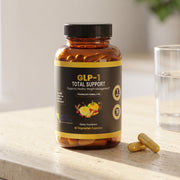
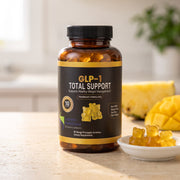
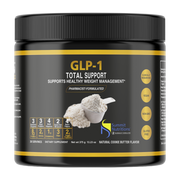
Summit Nutritions GLP-1 Total Support Powder is a dietary supplement designed to complement a daily wellness routine. It is not a GLP-1 medication and is not presented as a replacement for prescribed treatment. (Summit Nutritions)
The formula is also listed as soy-free, gluten-free, and non-GMO. The product may be useful for someone looking for a convenient powder that combines protein with amino acids, fiber, digestive enzymes, vitamins, and minerals. Individual tolerance and results will vary.
Anyone taking prescription medication or managing a medical condition should speak with a physician or pharmacist before adding a dietary supplement.
Common Mistakes to Avoid
Treating Protein Powder as a Complete Diet
Protein is important, but the body also needs carbohydrates, fats, fiber, vitamins, minerals, and fluids.
A protein drink should not automatically replace every meal.
Choosing the Highest Protein Number
More is not always better.
A product should fit the person’s actual needs, health status, appetite, and remaining food intake.
Drinking a Large Shake Too Quickly
Some people may find that a smaller portion, a thinner texture, or slower sipping feels more comfortable.
Stop using the product and speak with a healthcare provider if it appears to worsen digestive symptoms.
Ignoring the Rest of the Day
A shake may contain protein, but the rest of the diet still matters.
Consider the full day rather than judging nutrition by one drink.
Assuming “GLP-1 Support” Means Medication
A dietary supplement does not work in the same way as a prescription GLP-1 medication.
It should not be used to replace, reduce, or change prescribed treatment without instructions from the prescribing healthcare provider.
A Simple Daily Protein Check
At the end of the day, ask yourself:
- Did I include a protein source at breakfast?
- Did lunch contain a meaningful protein food?
- Was dinner balanced, even if the portion was small?
- Did I rely only on drinks today?
- Did I drink enough fluid based on my provider’s advice?
- Do I regularly feel weak, unusually tired, dizzy, or unable to eat?
- Should I discuss my intake with my healthcare provider?
This is not about judging the day as good or bad.
It is simply a way to notice patterns.
Frequently Asked Questions
Is Protein Powder Safe for Everyone Taking a GLP-1 Medication?
No product is appropriate for everyone.
A person should speak with a healthcare provider before using protein powder if they:
- Have kidney or liver concerns
- Are pregnant or nursing
- Are under 18
- Have food allergies
- Take prescription medication
- Have ongoing nausea, vomiting, diarrhea, or constipation
- Have difficulty eating or drinking enough
- Have been given a medically supervised diet
Can Protein Powder Replace a Meal?
A standard protein powder is not always a complete meal.
Many protein powders do not provide enough calories, fats, carbohydrates, fiber, vitamins, or minerals to serve as a balanced meal. A product specifically formulated as a meal replacement is different and should still be used according to professional guidance.
Is Whey or Plant Protein Better?
Neither type is automatically better for every person.
Whey may suit people who tolerate dairy. Plant protein may suit people who avoid dairy or prefer a vegan source. Taste, digestion, allergens, and protein amount should all be considered.
When Is the Best Time to Drink Protein Powder?
There is no single required time.
Some people use it:
- With breakfast
- Between meals
- After approved exercise
- When a meal is unusually small
- As part of a snack
Consistency and total daily nutrition may be more useful to discuss than finding a perfect time.
Can Protein Powder Prevent Muscle Loss?
Protein powder should not be promoted as preventing muscle loss.
Adequate protein intake and resistance exercise are discussed in current research as supportive strategies, but results depend on many factors. More direct clinical research involving GLP-1 medication users is still needed. (PubMed)
The Final Takeaway
Maya did not need the largest shake or the product with the longest ingredient list.
She needed a simple routine that fit her smaller appetite.
Some days, that meant eggs at breakfast. Other days, it meant yogurt with a small amount of protein powder. On especially busy days, it meant a light drink between meetings.
Protein powder for GLP-1 users may offer convenience when portions are smaller or preparing food feels difficult. It should still be viewed as one part of a larger nutrition plan.
The most supportive approach is usually simple:
- Start with real foods where practical
- Use protein powder to fill reasonable gaps
- Pay attention to total nutrition, not protein alone
- Include appropriate physical activity
- Follow the directions of the prescribing healthcare provider
- Speak with a registered dietitian when personal guidance is needed
Protein powder does not replace medical care, prescription medication, balanced meals, or movement.
It may simply make one part of the daily routine a little easier.
References
Bikou, A., Dermiki-Gkana, F., Penteris, M., Constantinides, T. K., & Kontogiorgis, C. (2024). A systematic review of the effect of semaglutide on lean mass: Insights from clinical trials. Expert Opinion on Pharmacotherapy, 25(5), 611-619. https://doi.org/10.1080/14656566.2024.2343092
Christensen, S., Robinson, K., Thomas, S., & Williams, D. R. (2024). Dietary intake by patients taking GLP-1 and dual GIP/GLP-1 receptor agonists: A narrative review and discussion of research needs. Obesity Pillars, 11, Article 100121. https://doi.org/10.1016/j.obpill.2024.100121
Mozaffarian, D., Agarwal, M., Aggarwal, M., Alexander, L., Apovian, C. M., Bindlish, S., Bonnet, J., Butsch, W. S., Christensen, S., Gianos, E., Gulati, M., Gupta, A., Horn, D., Kane, R. M., Saluja, J., Sannidhi, D., Stanford, F. C., & Callahan, E. A. (2025). Nutritional priorities to support GLP-1 therapy for obesity: A joint advisory from the American College of Lifestyle Medicine, the American Society for Nutrition, the Obesity Medicine Association, and The Obesity Society. Obesity, 33(8), 1475-1503. https://doi.org/10.1002/oby.24336
Tinsley, G. M., & Heymsfield, S. B. (2024). Fundamental body composition principles provide context for fat-free and skeletal muscle loss with GLP-1 RA treatments. Journal of the Endocrine Society, 8(11), Article bvae164. https://doi.org/10.1210/jendso/bvae164
Summit Nutritions. (n.d.). GLP-1 Total Support Powder with fiber, protein, and collagen, 30 servings. Retrieved July 19, 2026.
Medical and Regulatory Disclaimer
This article is provided for general educational purposes only. It is not medical advice and is not intended to diagnose, treat, cure, or prevent any disease. Dietary supplements are not substitutes for prescription medication, balanced nutrition, or professional medical care.
Do not begin, stop, reduce, or change a prescribed GLP-1 medication based on this article. Speak with a physician, pharmacist, or registered dietitian before using a dietary supplement, especially if you take medication, have a medical condition, are pregnant or nursing, or experience continuing digestive symptoms.